Dr. Thoa Fenton on Building PI Aesthetics as a Family Practice and What That Changes for Patients
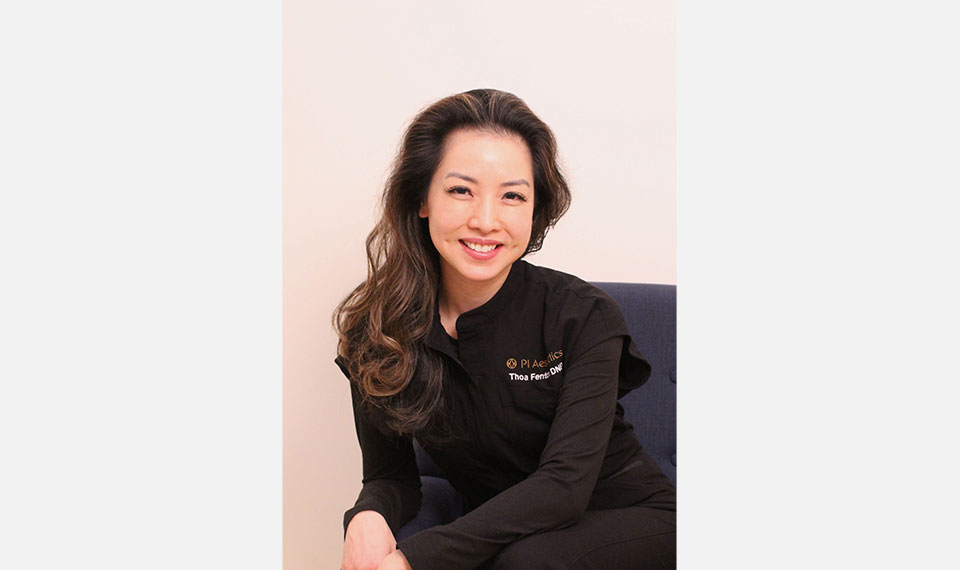
Q: You spent over a decade in hospital medicine before opening a medspa. What drew you to aesthetics?
TF: Somewhere in those years, I noticed I was putting my own wellbeing last while I focused on everything and everyone else (family, work, and life). I wanted to change that, and I wanted to help others make the same change. People often misunderstand what aesthetics is. It sometimes gets dismissed as vanity. In reality, it is far more profound than that. It is about how you feel, how you carry yourself in the world, and helping you build the confidence to show up as the best version of yourself. I now also get to know my patients over time rather than meeting them once during a crisis, and to focus on their confidence and wellbeing as an ongoing part of their life, not just a single moment of care. That continuity is where trust is built, and trust is the whole foundation of how we (and I) practice at PI Aesthetics.
Q: You founded PI Aesthetics shortly after the COVID pandemic. Why then?
TF: This had been on my mind for a while, but caring for COVID patients firsthand is what truly shaped the decision. What stayed with me was not just how hard those times were, but how much strength came from the community. The support we received as frontline caregivers carried us through in ways I had not expected, and it showed me firsthand what people are capable of when they show up for each other. That experience is a big part of why community partnership is built into how we operate today, as one of our founding beliefs.
Q. You and your husband Dr. Federico are both co-owners and injectors at PI Aesthetics. Do you ever stop talking about the practice?
TF: We definitely joke that PI Aesthetics is our third baby! The truth is, we've been working together long before we opened the practice, so collaborating is just part of who we are. Do we talk about work at home? Absolutely - but it's usually because we're excited about a patient result, a new idea, or how we can make the practice even better. That said, we've also learned that date nights are much more fun when we don't spend the entire dinner discussing lasers, and treatment plans. It's all about finding the balance... even if aesthetics still sneaks into the conversation every now and then!
Q: What does it change for patients when the medspa is family-run?
TF: What being a small business, doctor owned and run, really gives us is the freedom to run on our mission, not by pressure from anyone else's bottom line. There are no outside investors setting revenue targets, no corporate pressure shaping what we recommend, and no incentive structure pulling us toward anything other than what is right for the person in front of us. Every decision comes down to what is genuinely good for the patient, because that freedom is what let’s us recommend only what we truly believe in. Our guidance is always based on what will benefit our patients and rooted in medical evidence, rather than what fills a treatment room or trending on social media. Patients feel that difference. They know the advice they are getting here is honest, and honest advice is what real trust is built on.
Q: Seattle Met recognized you as a top provider three years in a row. What do you think sets your approach apart?
TF: What sets my approach apart is that I treat aesthetic medicine as serious medicine, not just as "beauty treatments." I hold myself to real purpose and excellence in my work, and to building relationships with patients that last well beyond their first visit. Every treatment plan begins the same way, with an honest conversation about what someone actually hopes to achieve, a thorough explanation of their options, and an honest assessment of what I can and cannot do for them.
Q: How do you approach a first-time patient who is nervous about looking "overdone"?
TF: That fear is almost universal for first-time patients. The outcomes people notice in others are usually, the ones that do not look natural, so that becomes the picture people have in their head of what these treatments do. But the truth is, the best outcomes are the ones that are subtle and natural-looking. I can guarantee that many people you know have had aesthetic treatments done and they look great, but you would have no idea unless they told you themselves. That is exactly what a great outcome looks like to me, and what I aim for. Education makes a real difference here. I spend a lot of time with every patient talking through what a good outcome looks like, listening closely to their concerns and goals, and making sure we arrive at a plan together rather than me deciding for them.
Q: Giving back to the community seems to be a core value for your practice. Which local causes or initiatives are you most passionate about?
TF: Giving back is a fundamental part of who we are, not something layered on top of our practice. As a small business, I believe we have an obligation to be a force for good, not just a source of profit. There is a real win-win in that. We bring our whole community together around it, our patients, our vendors, our staff, everyone. That looks like patient raffles for services, vendors contributing products or their time, and our own team pitching in alongside them. We are all one team, and that shared effort spreads the energy of caring in a way a single donation never could. Right now, our main community partner is Domestic Violence Services of Snohomish County, which provides shelter, advocacy, and long-term resources to survivors and their children across the county. Their work is about helping people reclaim safety and stability, and that connects directly to our purpose. Confidence and wellbeing cannot exist without safety first.
Q: As a medspa owner and a practitioner, how much of your time goes to treating patients versus managing the business?
TF: Being a small business owner is a lot of work. It might not be apparent at first sight, but the scaffolding it takes to run a small med spa effectively (operations, staffing, systems, marketing, finances, compliance, quality assurance program, and more) is an intense amount of work, even for a small size operation. What makes it work for me is that I do not do it alone. My husband and co-founder, Dr. Federico, brings strength in the operational side of running a practice, and that partnership is what allows me to stay focused on patients and mission. I think that is true of most successful small businesses. It rarely comes down to one person doing everything. It comes down to the right people carrying the right parts together.
Q: How do you stay current with new products and techniques?
TF: Aesthetic medicine is a bit of a wild west compared to most of medicine. There are no consistent national standards for training, no unified certification requirements, and continuing education is often optional rather than expected. Honestly, that should concern people. It is exactly why I take continuous education so seriously in my own practice. We invest a lot of time, effort, and money in pursuing high-quality trainings, because my patients deserve us practicing at the leading edge of our field. I am just as careful about what products and services I bring into my practice. If something has not proven itself clinically, it does not matter how popular it is or how much profit it could bring us, we will not be offering it at our clinic.
Q: If you could identify a current trend in aesthetic medicine, how do you see patients' goals evolving?
TF: The biggest shift I have seen is the move away from exaggerated results toward natural looking results. For a while, this industry had a culture where more was treated as better, and patients often ended up looking like an exaggerated version of themselves. I have always believed in natural results as the clinical standard, so to me this shift feels less like a new trend and more like the field moving to where it always should have been. My hope is that this becomes permanent, not a passing moment. Patients deserve outcomes that make them feel more like themselves, not less.
Four Things About Dr. Thoa Fenton, DNP
1. Your favorite thing about living in the Greater Seattle area?
The scenery, food, and outdoor adventures are endless here in the Pacific Northwest. After moving from the Midwest, we've fallen in love with having the mountains, the ocean, and incredible restaurants all within reach. My favorite part is getting to experience it all with my boys - and enjoying the mild weather year-round is a pretty great bonus.
2. What is your go-to spot to grab a meal or coffee with your family?
We love supporting local businesses because we know firsthand how much heart and hard work goes into running one. Our go-to spots are Mon Amie Bakery and Bequest Coffee - great coffee, delicious treats, and the kind of welcoming atmosphere that keeps us coming back.
3. Your favorite treatment to perform?
Facial balancing with dermal fillers is my favorite treatment to perform. I love that it can create subtle, harmonious changes with results patients can appreciate right away. Seeing their reaction when they look in the mirror for the first time is everything. That moment of renewed confidence is incredibly rewarding and reminds me every day that I made the right decision to be in aesthetics medicine.
4. When you're not at the clinic or being a mom, what do you do to recharge?
When I'm not at the clinic or with my boys, I recharge by going for a run, it clears my mind and helps me reset. I also love cooking for my family. There's something so fulfilling about gathering around the table and watching everyone enjoy a meal I've made; it truly brings me joy. And when I have a quiet moment, you'll usually find me curled up with a good book.